Bean-to-cup or portafilter machine: which espresso machine suits you?
A bean-to-cup machine does it all with one button; with a portafilter machine you pull the shot yourself. Here is what you do, what the machine does and which suits the way you drink coffee.
Popular picks from this guide
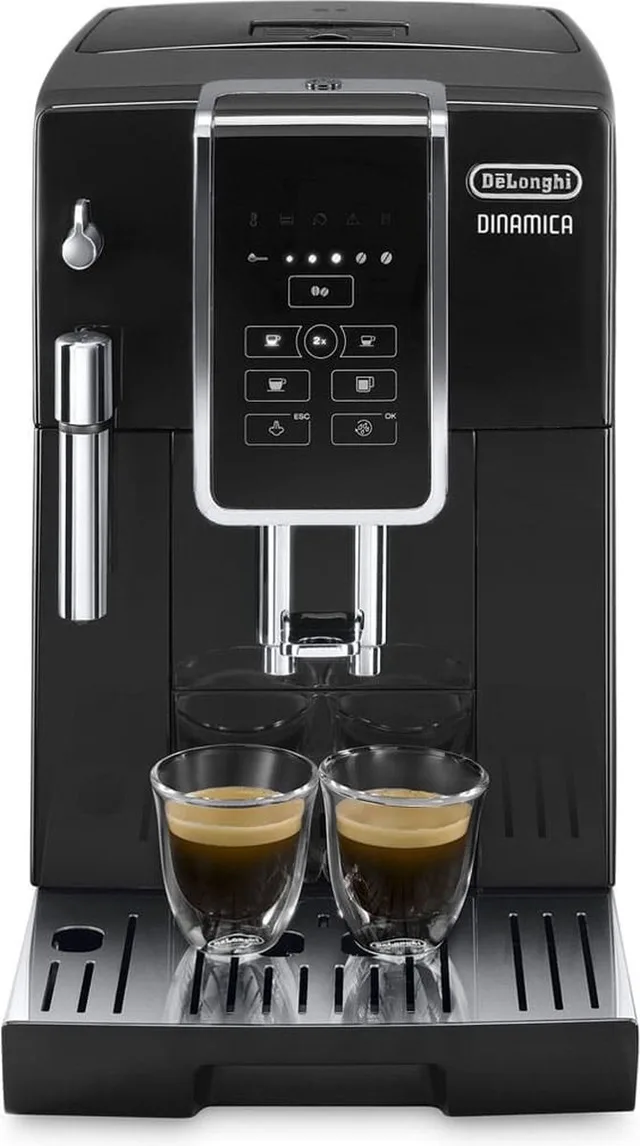
Popular products at today's lowest price. Compare every shop on the product page.
Short answer: A bean-to-cup machine grinds, brews and froths milk at the touch of a button. With a portafilter espresso machine you do those steps yourself: grind, tamp, brew and steam. If you want ease and a quick cup, choose bean-to-cup; if you want to shape the taste yourself and enjoy learning how, choose a portafilter machine.
Below is what the manufacturers state and what the product data says. Crematto tests no machines itself; always follow the manual of your own machine.
The difference in one minute
Both machines make espresso: hot water is pushed under pressure through finely ground coffee. The difference is who does what.
| Bean-to-cup | Portafilter machine | |
|---|---|---|
| Grinding | built-in grinder | separate or built-in grinder |
| Dosing and tamping | the machine | you |
| Frothing milk | often automatic | with the steam wand |
| Cleaning | rinse and cleaning programmes | portafilter and steam wand after each use |
| Learning | hardly any | a few weeks of practice |
The Italian espresso institute INEI describes an espresso as about 7 grams of coffee, water at around 88 °C, about 9 bar of pressure and roughly 25 seconds of brewing for 25 ml in the cup. A portafilter machine lets you adjust those things yourself; a bean-to-cup machine works from the settings you pick in its menu.
What you do yourself with a portafilter machine
A portafilter machine (in Dutch a "pistonmachine") has a portafilter: the handle with a filter basket that you lock into the machine. You grind the beans, dose the coffee into the basket, press it down with a tamper and pull the shot. If it tastes sour or runs too fast, you grind finer; if it is bitter or runs slowly, you grind coarser. That fine-tuning is what enthusiasts enjoy.
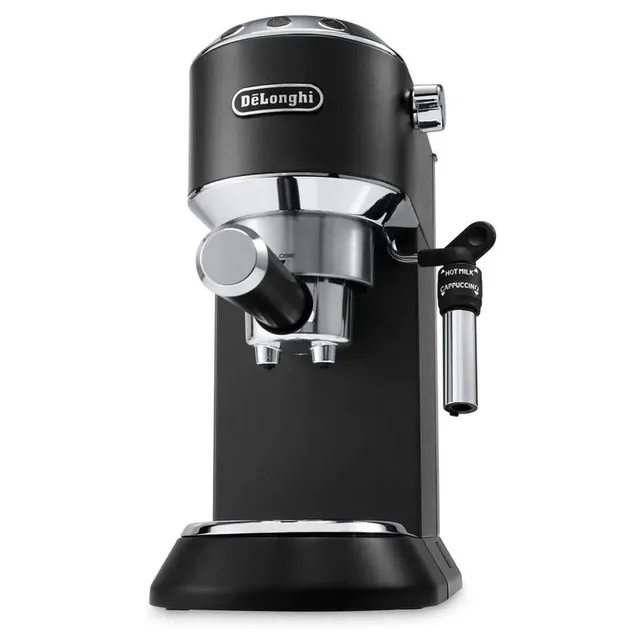
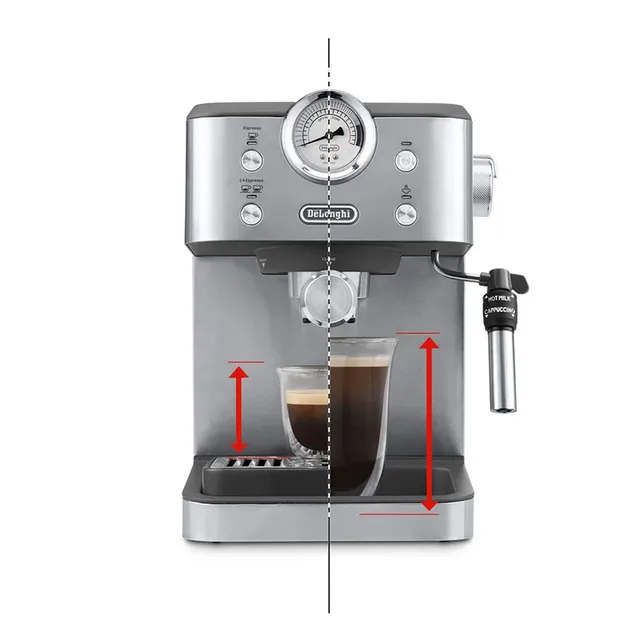
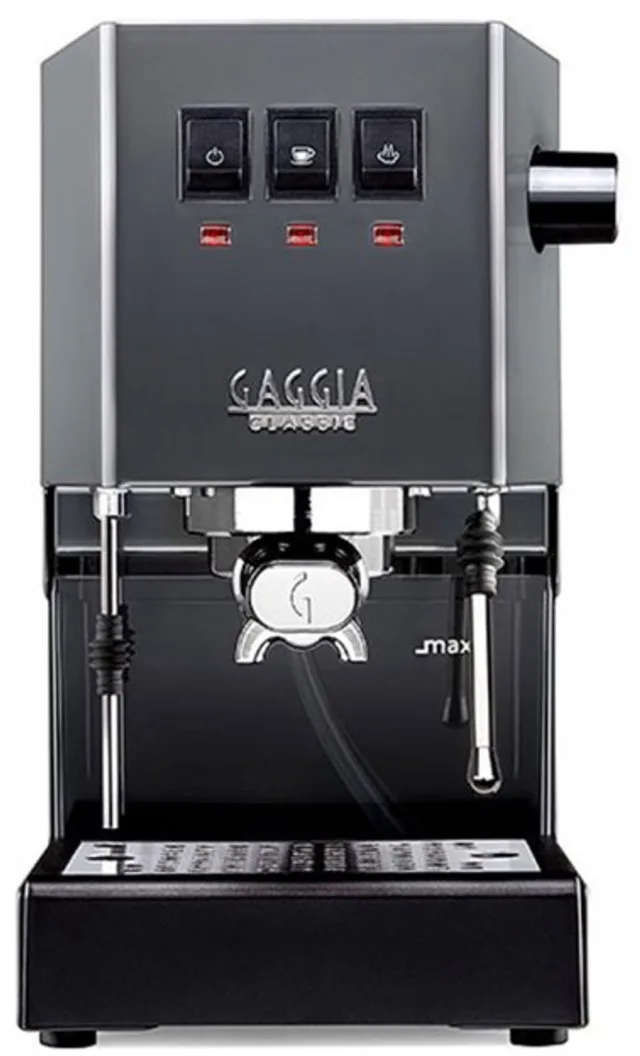
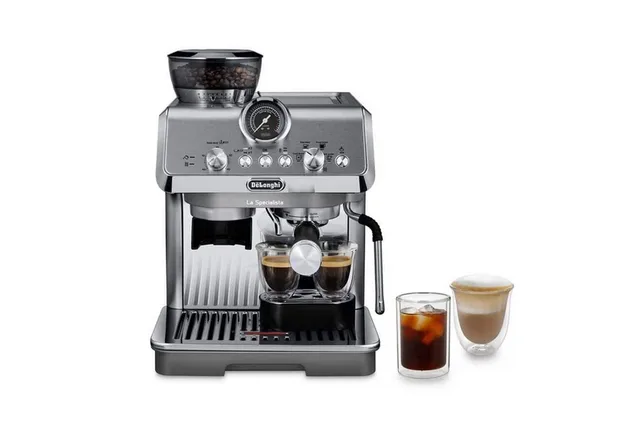
There are entry-level models with a thermoblock, such as the De'Longhi Dedica Style EC685 and the De'Longhi Classic EM450. Gaggia gives 15 bar of pump pressure for the Classic Evo Pro. At Lelit you find machines with a heat exchanger, such as the MaraX V2, and with two boilers, such as the Elizabeth PL92T, which brew and steam at the same time. If you want the grinder inside, there are models with a built-in grinder, such as the De'Longhi La Specialista Arte Evo and the Krups XP801T.
Portafilter machines from entry level to dual boiler
- De'Longhi
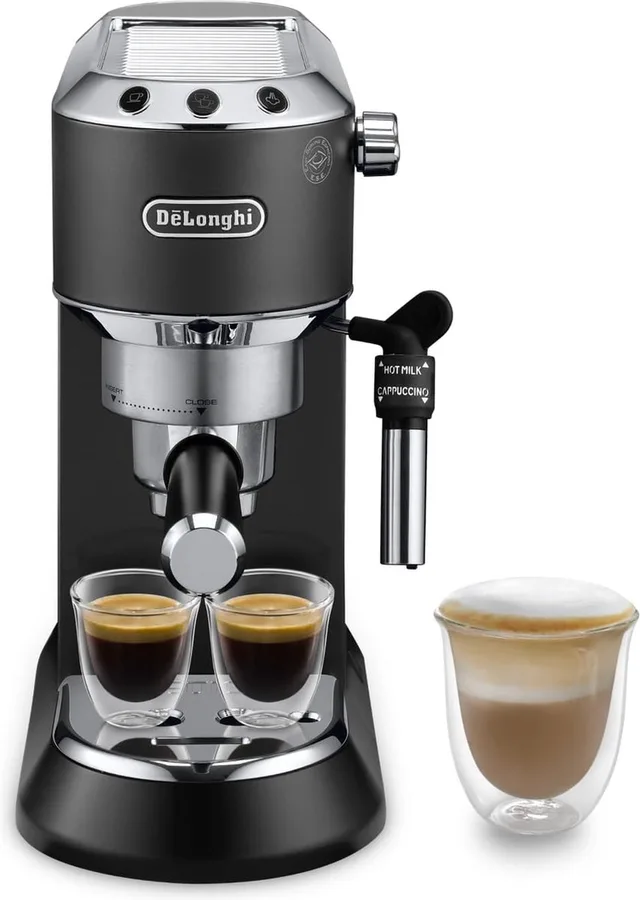
Dedica Style EC685.BK manual espresso machine, black
15 bar1.1 l1,300 WFrom €139 · at 3 shops
- De'Longhi
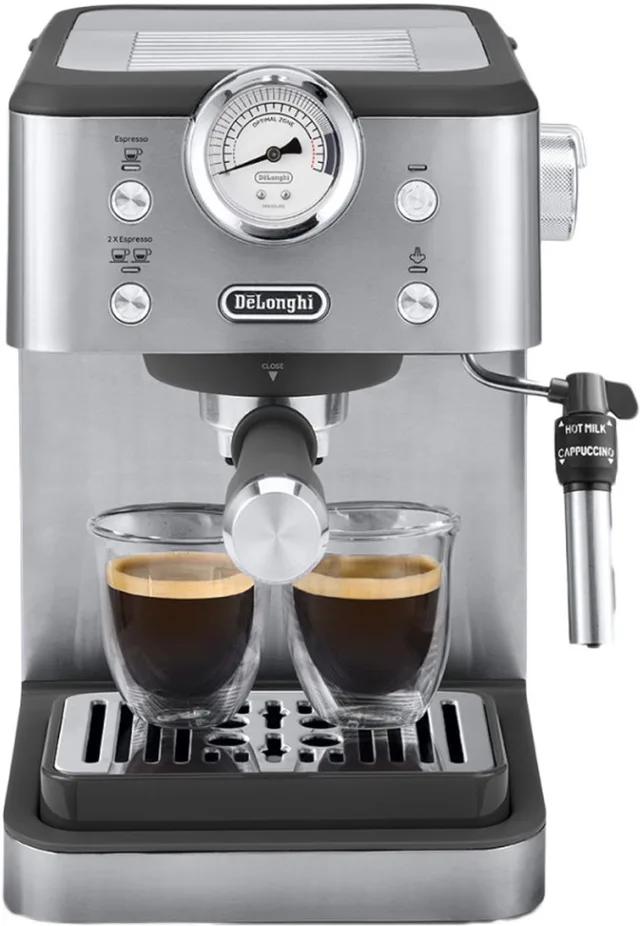
Classic EM450.M manual espresso machine for espresso and cappuccino
full stainless steel housing · silver15 bar1.7 l1,350 WFrom €129 · at 3 shops
- Gaggia
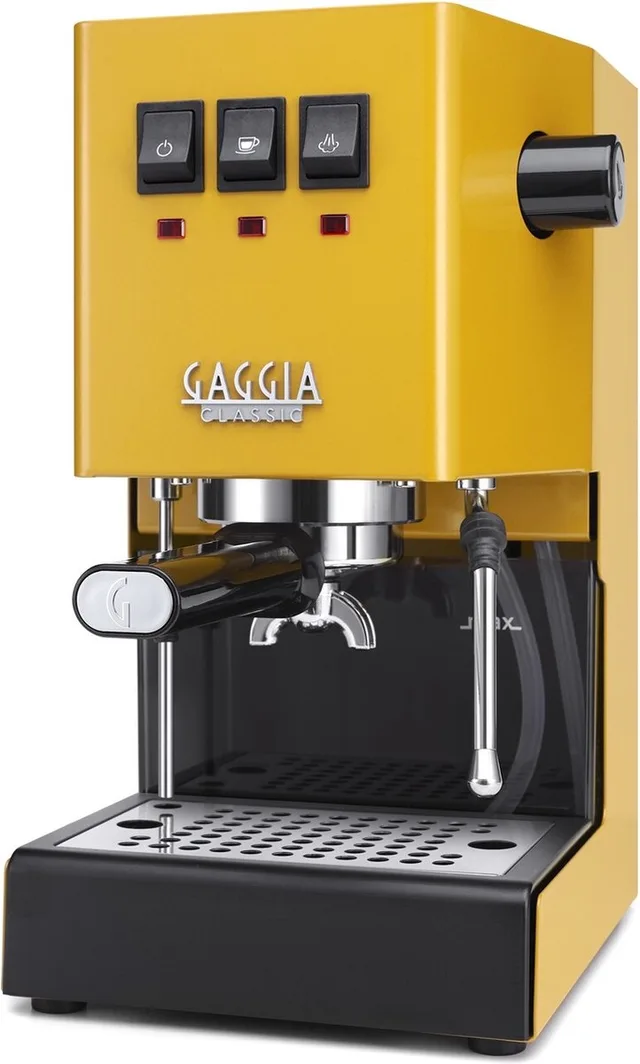
Classic Evo Pro
Pistonmachine · design 202315 bar2.1 l1,200 WFrom €499 · at 1 shop
Lowest in 27 days
- De'Longhi
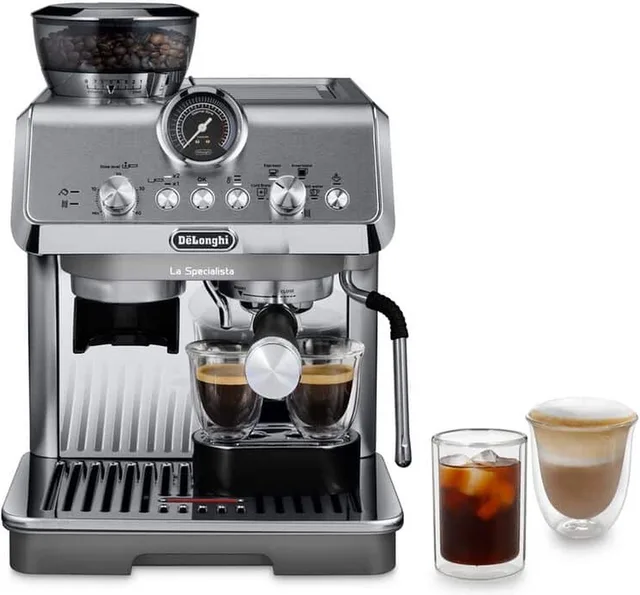
La Specialista Arte Evo EC9255.M
Pistonmachine met bonenmaler · Cold Brew15 bar1.7 l1,550 WFrom €457.93 · at 4 shops
- Krups
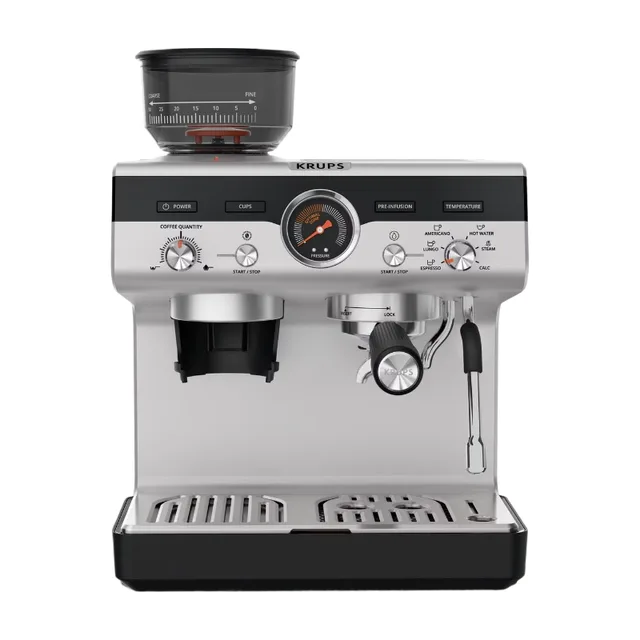
XP801T Precision semi-automatic espresso machine with grinder
intuitive interface · 250 g bean hopper3 lStainless steelFrom €375 · at 2 shops
Lowest in 19 days
- Lelit
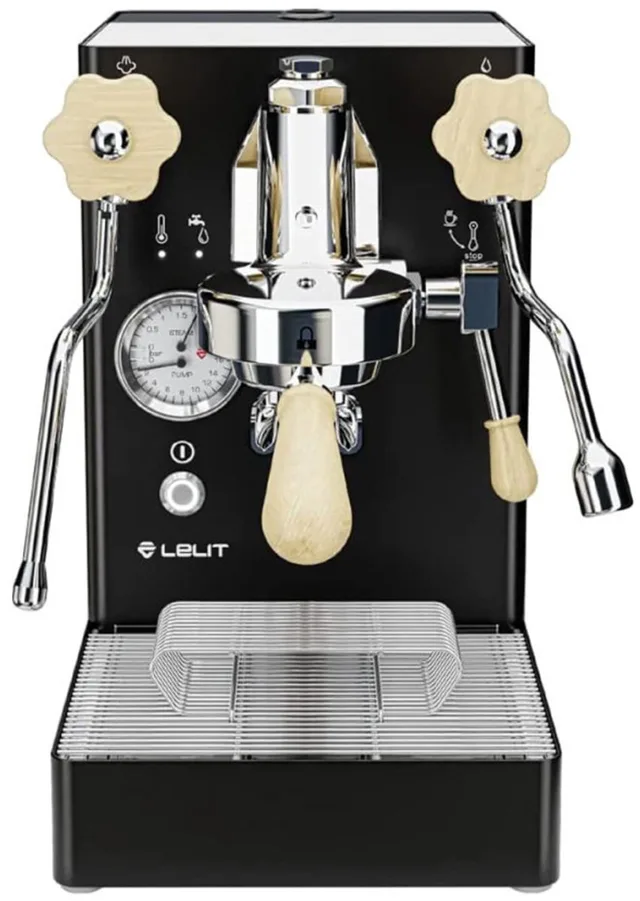
MaraX V2
2.5 lBlack€1,275 · at 1 shop
What a bean-to-cup machine does for you
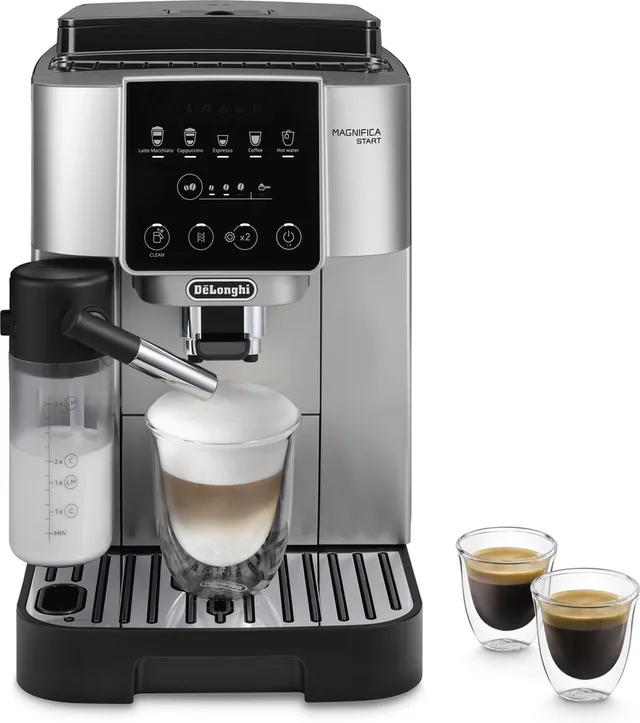
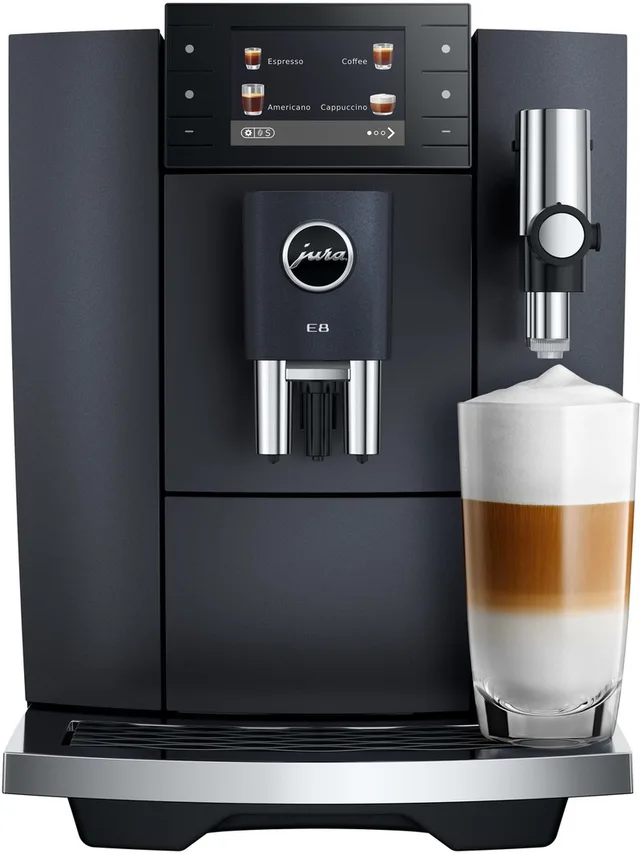
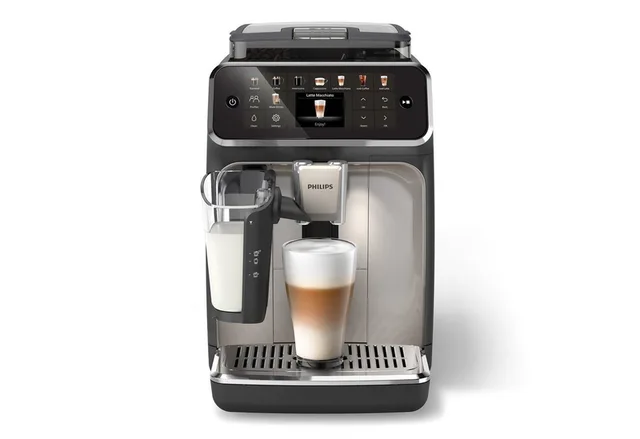
A bean-to-cup machine has a bean hopper, a grinder and a brewing unit in one housing. You pick a drink on the display and the machine grinds, doses, tamps and brews. Strength, volume and grind size are set in the menu. Many models also make cappuccino and latte macchiato by themselves, with a milk system that draws up the milk and froths it.
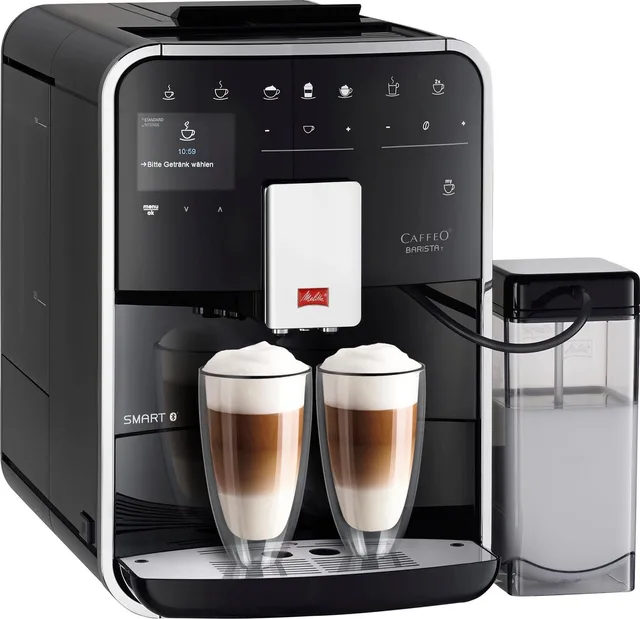
Examples are the Jura E8, the Philips 5500 LatteGo, the De'Longhi Magnifica Evo, the De'Longhi Eletta Explore and the Melitta Barista Smart T. What to look for when you choose one (milk system, grinder, bean hopper, upkeep) is in our guide Choosing a bean-to-cup machine.
Bean-to-cup machines with a milk system
- Jura
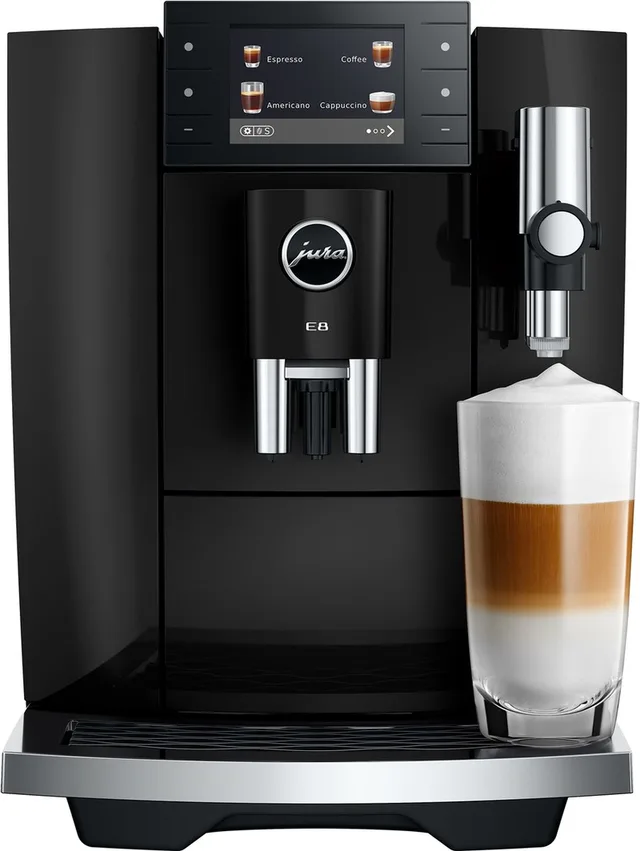
E8 (ED) fully automatic espresso machine
15 bar1.9 lPiano Black, Cosmic BlackFrom €1,149 · at 4 shops
- Philips
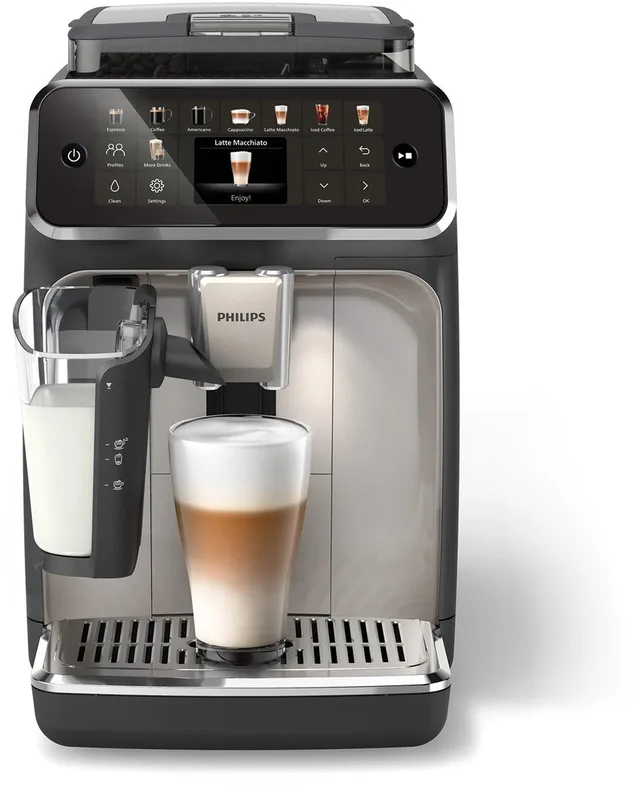
5500 series LatteGo EP5547/90 fully automatic espresso machine
20 coffee recipes · ceramic grinder15 bar1.8 l1,500 WFrom €579 · at 3 shops
- De'Longhi
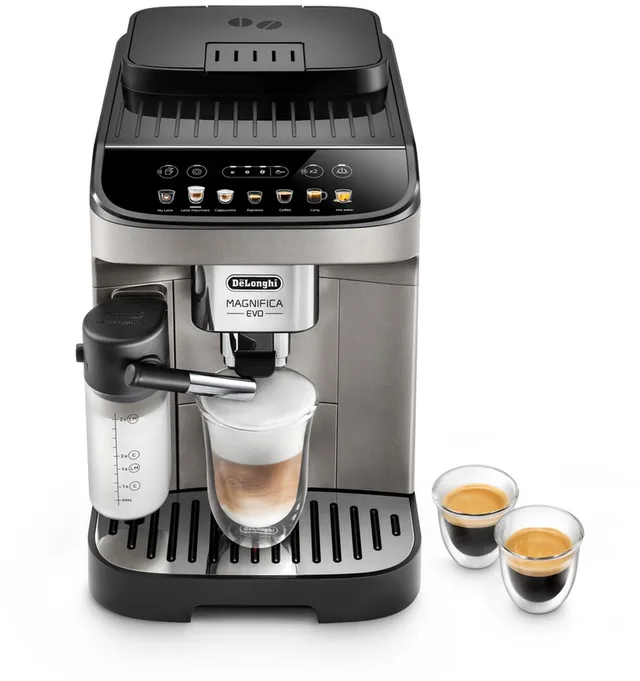
ECAM290.81.TB Magnifica EVO fully automatic espresso machine
15 bar1.8 l1,450 WFrom €409 · at 3 shops
- De'Longhi
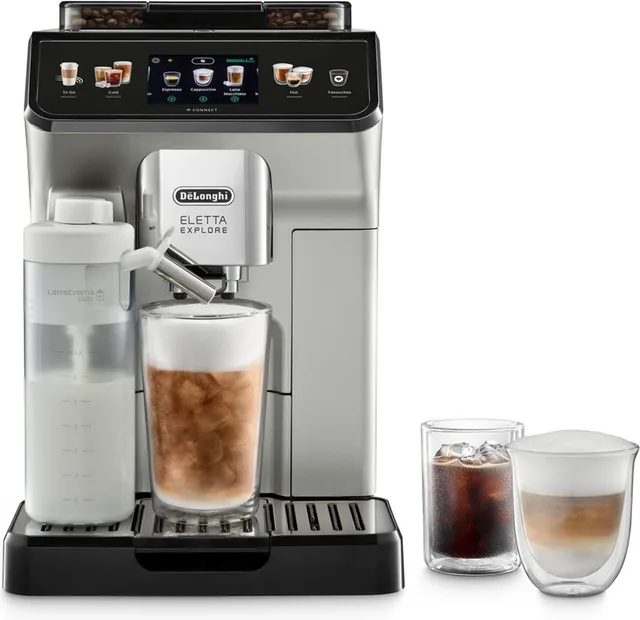
Eletta Explore ECAM450.65.S
Volautomatische espressomachine19 bar1.8 l1,450 WFrom €699 · at 4 shops
Lowest in 27 days
- Melitta
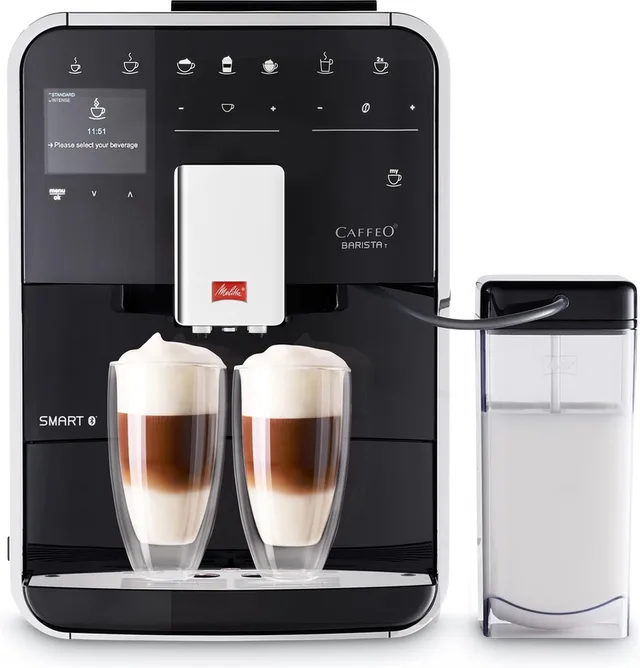
Barista Smart T fully automatic espresso machine F830-102
blackBlack · SilverFrom €729 · at 3 shops
Frothing milk
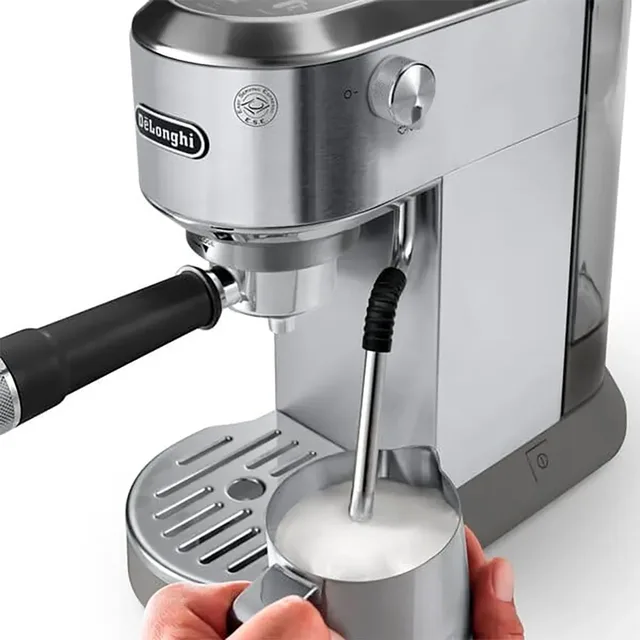
A portafilter machine has a steam wand. You hold the milk jug under it and make the foam yourself; with some practice it gets fine enough for latte art. On a machine with one boiler or a thermoblock you wait a moment between brewing and steaming; a heat exchanger or dual boiler can do both at once.
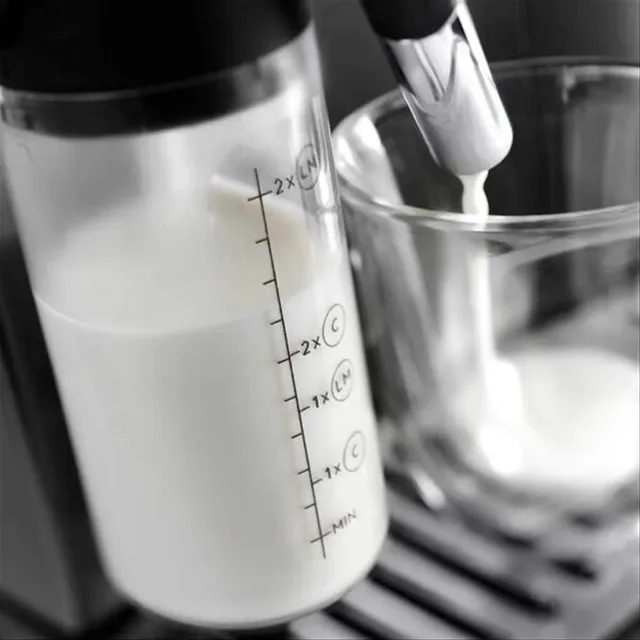
A bean-to-cup machine usually froths the milk itself, from a carafe or through a tube into the milk carton. You press cappuccino and get coffee and milk in one go. A few bean-to-cup machines only have a steam wand; the product description says so.
Cleaning and upkeep
With a portafilter machine you knock the used grounds out of the portafilter after each cup, rinse the basket and wipe the steam wand straight after use. Now and then you clean the group head with a cleaner made for it.
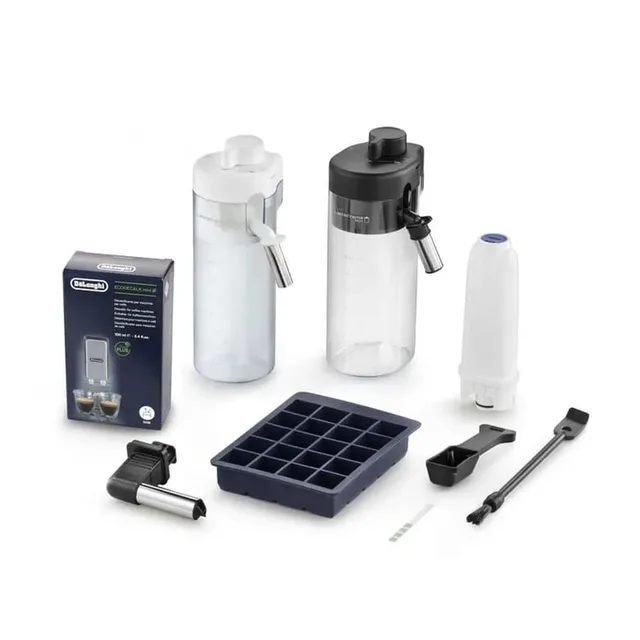
A bean-to-cup machine collects the grounds in a container and rinses itself when it switches on and off. According to the manuals of Philips, De'Longhi, Siemens and Melitta you take the brewing unit out regularly to rinse it. Jura uses a fixed brewing unit that you clean with cleaning tablets through a programme. Every bean-to-cup machine needs its milk system cleaned after use. Both kinds need descaling; how often depends on how hard your water is. Products for it are under descaling and care.
Space, grinder and what else you need
A bean-to-cup machine is all in one: plug it in, add beans and you are ready. Do measure the height under your wall cupboards, because you fill the bean hopper from the top.
With a portafilter machine without a built-in grinder you need a separate coffee grinder that grinds fine enough for espresso, such as the Eureka Zero 65 or the Smeg CGF03. Also handy: a tamper, a milk jug and a knock box for the grounds. So plan for more space on the worktop.
Which one suits you?
- You want a quick cappuccino in the morning without fuss, or several people at home drink different things: a bean-to-cup machine.
- You want to decide the taste yourself, try different beans and learn latte art: a portafilter machine.
- You are in two minds and want to brew yourself, but without a separate grinder: a portafilter machine with a built-in grinder.
Which beans to use is under coffee beans.
Frequently asked questions
Does a portafilter machine make better coffee than a bean-to-cup machine?
That depends on the beans, the grind and how you brew. A portafilter machine lets you adjust more yourself, so you can get more out of it, and also get more wrong. A bean-to-cup machine gives the same cup every time with the settings you choose.
How many bar does an espresso machine need?
INEI gives about 9 bar for an espresso. Manufacturers put the maximum pump pressure in the name, often 15 bar or more. That is what the pump can reach, not the pressure the coffee is brewed at.
Do I need a separate grinder for a portafilter machine?
Only if the machine has no built-in grinder. For espresso the grinder must grind fine and in small steps. Pre-ground espresso coffee also works, but then you cannot adjust the grind.
Can I use ground coffee in a bean-to-cup machine?
Many bean-to-cup machines have a separate chute for ground coffee, for example for decaf. Whether yours has one is in the product description.
Keep looking
Crematto doesn’t test machines itself. This guide sets out what manufacturers state.
Products from this guide
Popular products with a current price at the shops. Compare the prices on the product page.
- Jura
E8 (ED) fully automatic espresso machine
15 bar1.9 lPiano Black, Cosmic BlackFrom €1,149 · at 4 shops
- Philips
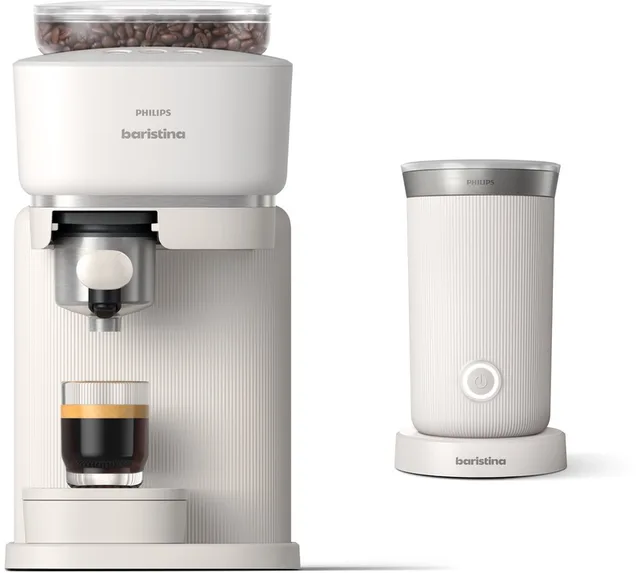
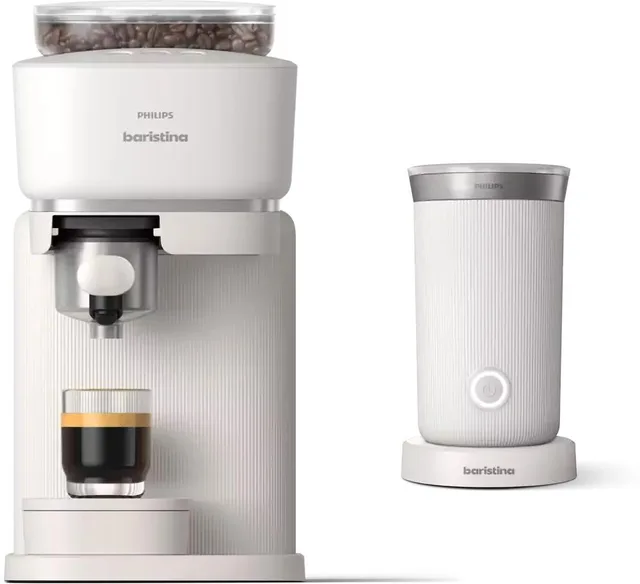
Baristina + Melkopschuimer Bundel
BAR303/00 · Pistonmachine16 bar1.2 lWhite, Wit & Wit€349 · at 1 shop
- De'Longhi
ECAM290.81.TB Magnifica EVO fully automatic espresso machine
15 bar1.8 l1,450 WFrom €409 · at 3 shops
- De'Longhi
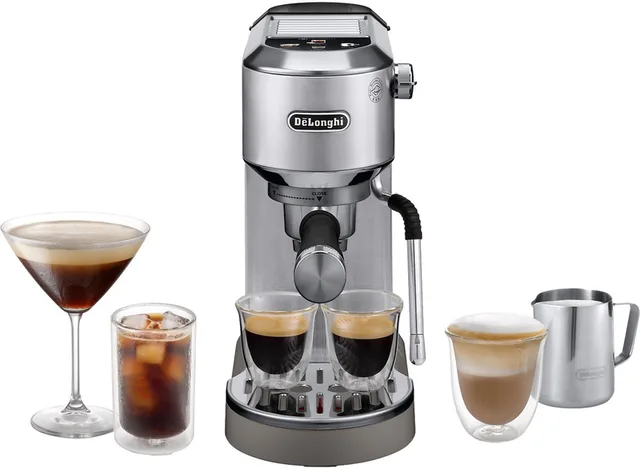
EC890.M Dedica DUO espresso machine
15 bar1.1 l1,450 WFrom €188.75 · at 4 shops
Lowest in 27 days
- De'Longhi
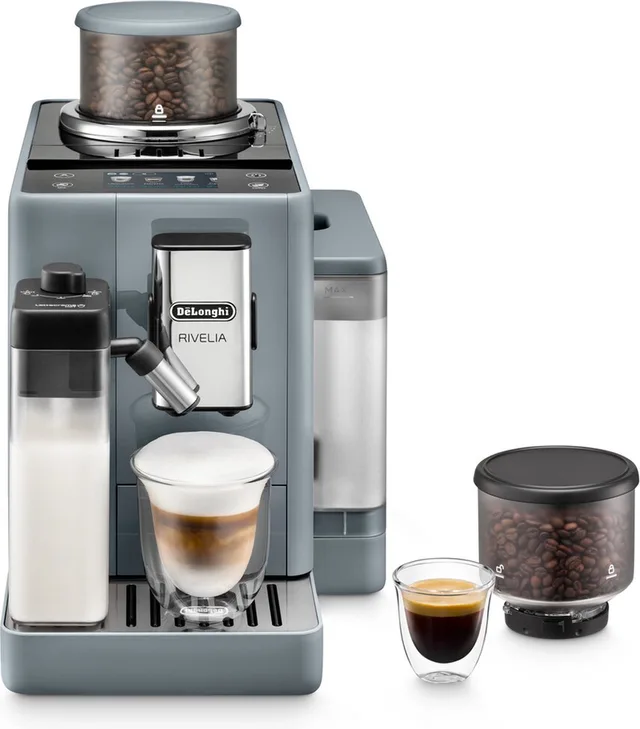
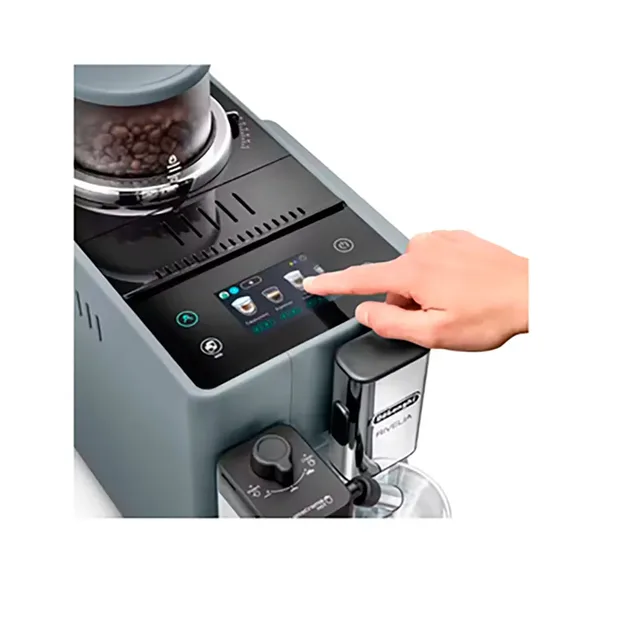
Rivelia fully automatic espresso machine with LatteCrema Hot milk frother and Bean Switch System
EXAM440.55.G19 bar1.4 l1,450 WFrom €496.64 · at 4 shops
Lowest in 25 days
More buying guides
- Choosing a bean-to-cup machine: milk system, grinder, hopper and upkeep On a bean-to-cup machine the milk system decides how easily you make a cappuccino and how much you clean. These are the points that matter when you choose, with what the makers say about them. Read the guide
- Capsules, pods or beans: which coffee system suits you? Every coffee system works only with its own capsules or pods. Here is how Nespresso Original and Vertuo, Dolce Gusto, L'OR Barista and Senseo compare, and when beans suit you better. Read the guide