Choosing a bean-to-cup machine: milk system, grinder, hopper and upkeep
On a bean-to-cup machine the milk system decides how easily you make a cappuccino and how much you clean. These are the points that matter when you choose, with what the makers say about them.
Popular picks from this guide
- Go to Bol.com
- Go to Bol.com
-
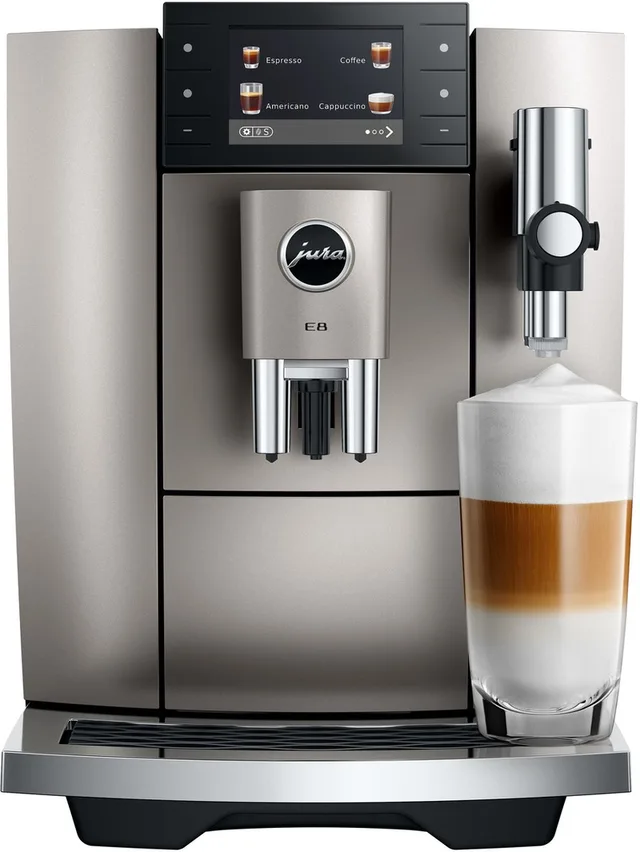
Jura E8 Midnight Silver (ED) fully automatic espresso machineGo to Coolblue
From €1,089 · at 5 shops
Lowest in 90 days
Popular products at today's lowest price. Compare every shop on the product page.
Short answer: With a bean-to-cup machine, look at the milk system first: it decides how easily you make a cappuccino and how much cleaning you do. After that come the grinder, the number of bean hoppers and the upkeep: a water filter and a removable or fixed brewing unit. The number of drinks on the display matters less than it seems.
What follows comes from the manufacturers and the product data. Crematto tests no machines itself. Still torn between bean-to-cup and a portafilter machine? Read Bean-to-cup or portafilter machine first.
The milk system
Broadly, a bean-to-cup machine froths milk in one of three ways.
| System | How it works | Example |
|---|---|---|
| Steam wand | you froth the milk yourself in a jug | simple models |
| Milk carafe or milk unit | the machine draws milk from a jug at the front and froths it | Philips LatteGo, De'Longhi LatteCrema |
| Milk tube | a tube goes into a milk carton or milk container | Jura, Siemens |
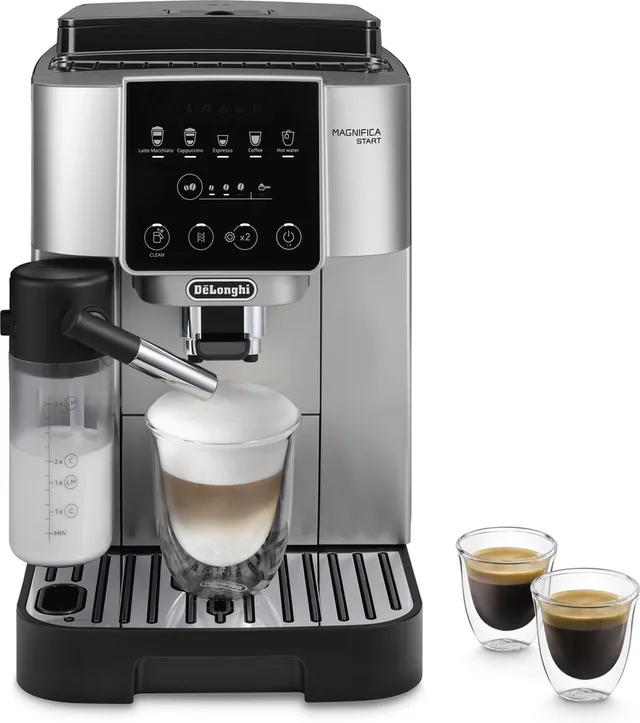
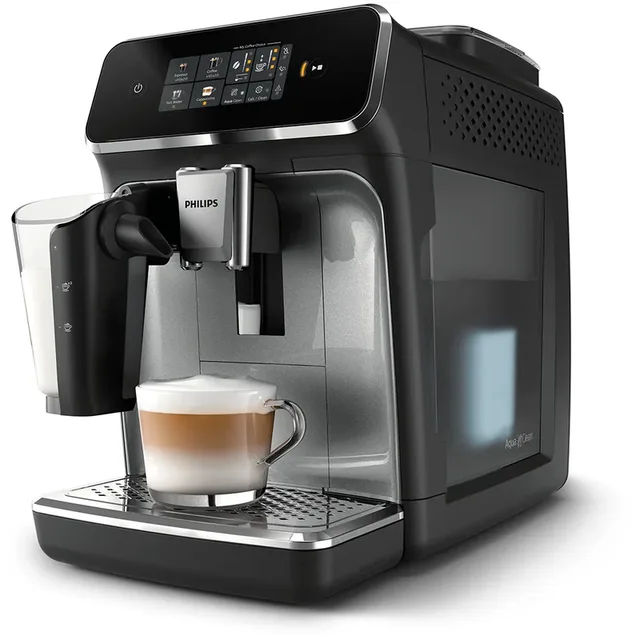
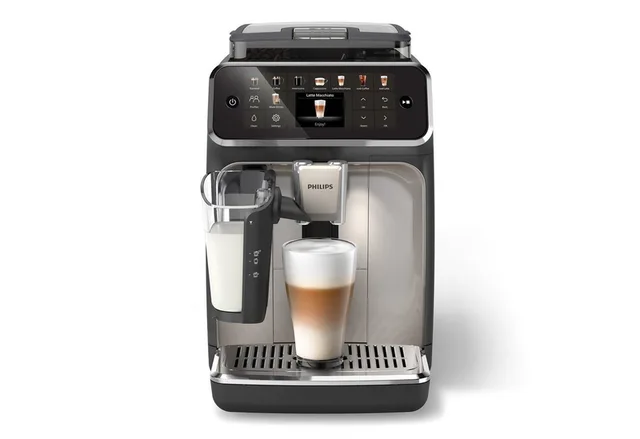
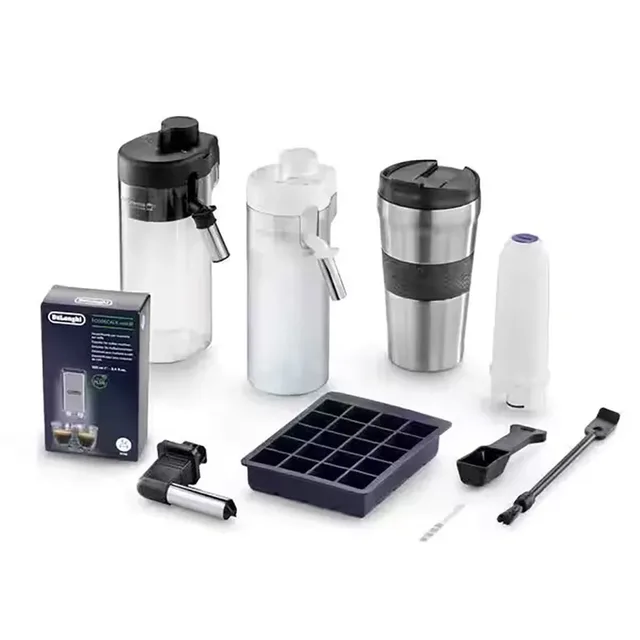
Philips describes LatteGo as a milk system of two parts without tubes that you rinse under the tap or put in the dishwasher. You find it on the Philips EP2339 LatteGo and the Philips 5500 LatteGo, among others. De'Longhi uses a LatteCrema milk jug; on the Magnifica Evo, according to De'Longhi, it can go into the fridge with the milk still in it. The Magnifica Evo Next has the LatteCrema Hot milk system, according to its product name. The De'Longhi Eletta Explore froths both hot and cold milk, according to its product name.
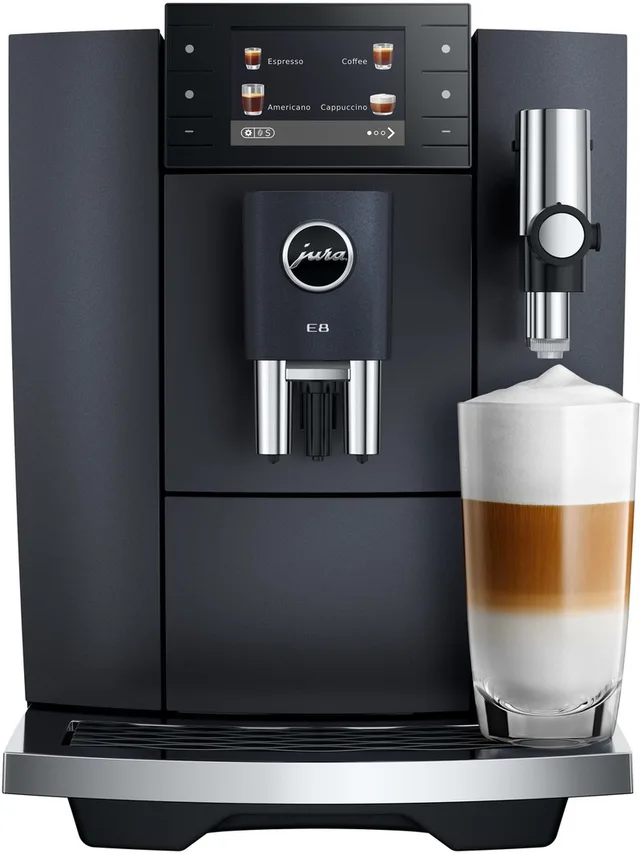
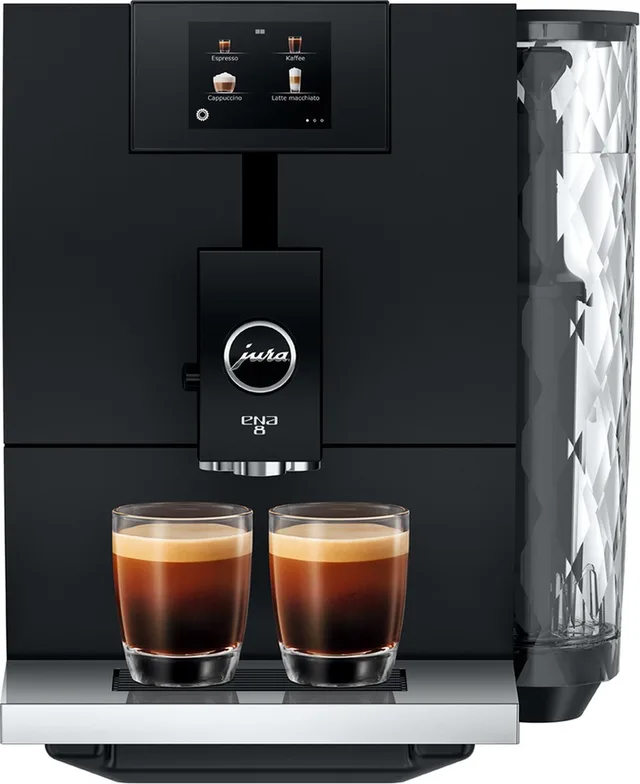
With a tube, as on the Jura E8 and the Jura ENA 8, the milk carton simply stands next to the machine. You flush the system after use with the rinse programme; Jura also sells a cleaner for it.
Bean-to-cup machines by milk system
- Philips
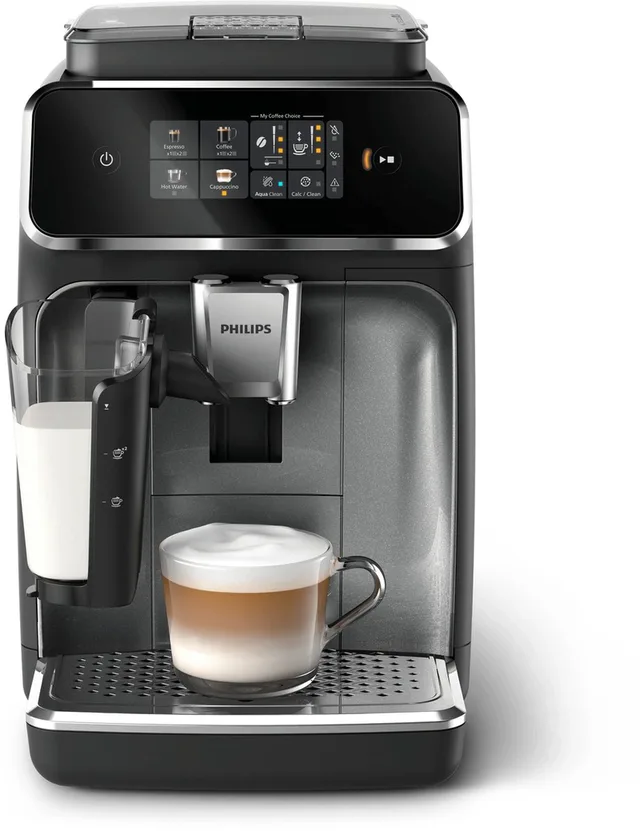
EP2339/40 LatteGo Volautomaat Grijs
15 bar1.8 l1,500 WFrom €405.01 · at 3 shops
- Philips
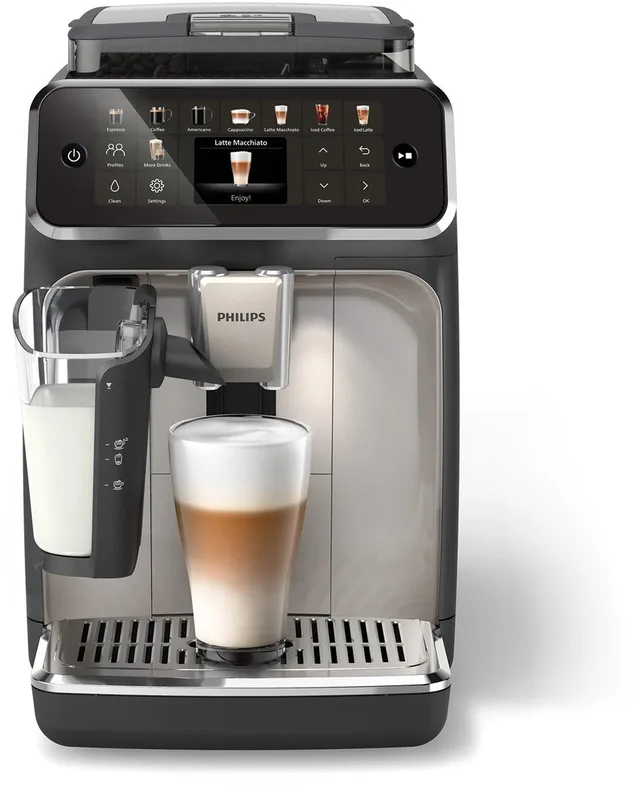
5500 series LatteGo EP5547/90 fully automatic espresso machine
20 coffee recipes · ceramic grinder15 bar1.8 l1,500 WFrom €579 · at 3 shops
- De'Longhi
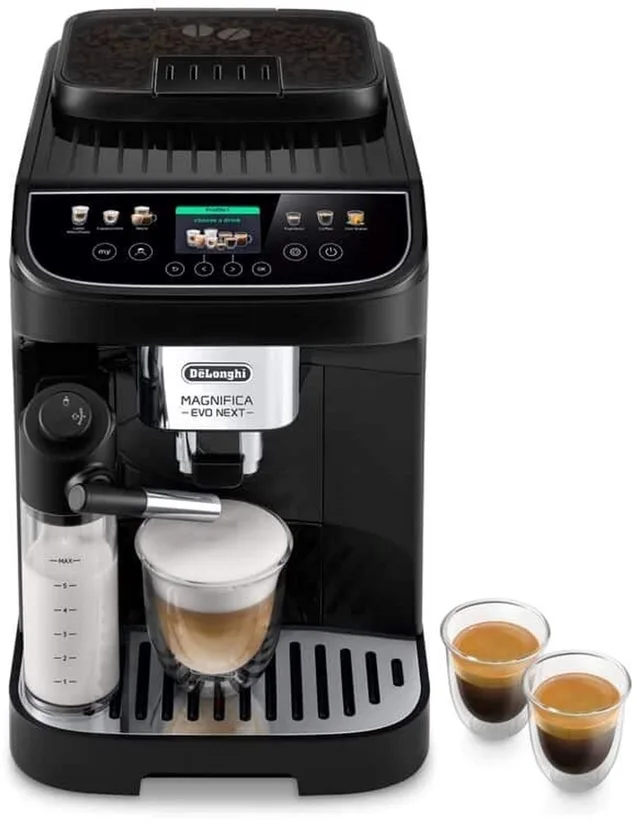
Magnifica Evo Next
ECAM310.60.B15 bar1.8 l1,450 WFrom €429 · at 3 shops
- De'Longhi
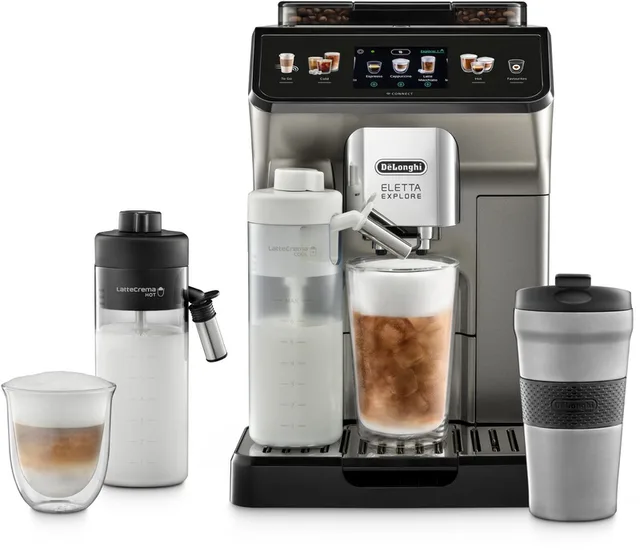
Eletta Explore ECAM450.86.T fully automatic espresso machine
50+ coffee recipes19 bar1.8 l1,450 W€879 · at 1 shop
Lowest in 90 days
- Jura
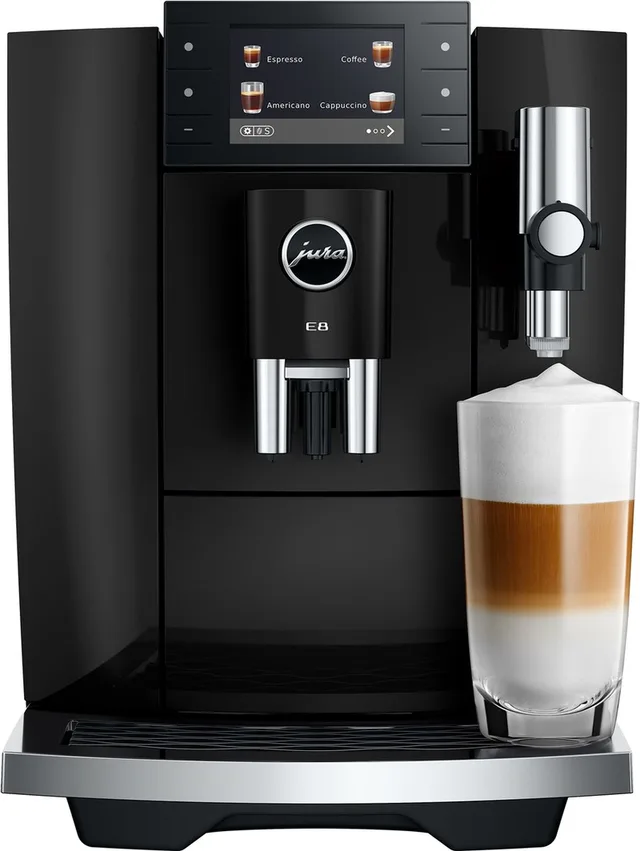
E8 (ED) fully automatic espresso machine
15 bar1.9 lPiano Black, Cosmic BlackFrom €1,149 · at 3 shops
- Jura
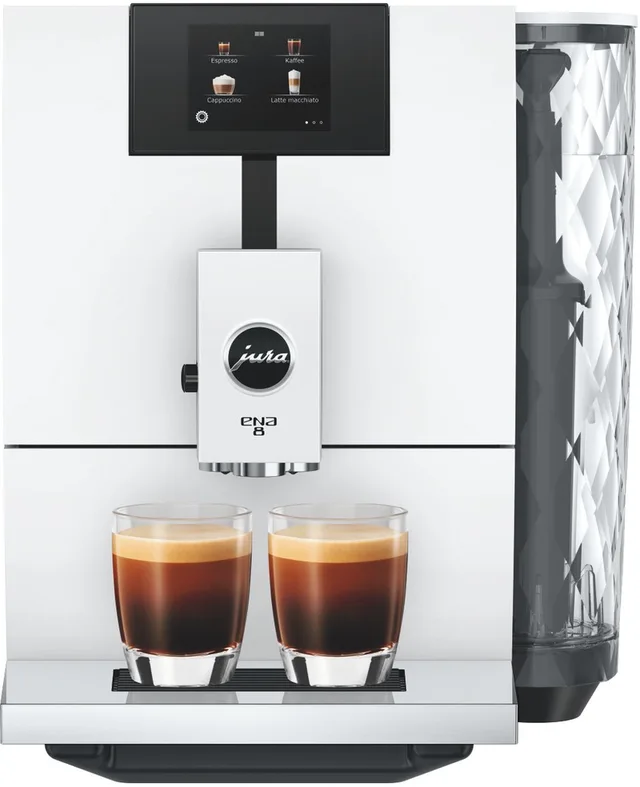
ENA 8 (EC) fully automatic espresso machine
Full Nordic White, Full Metropolitan BlackFrom €949 · at 3 shops
The grinder
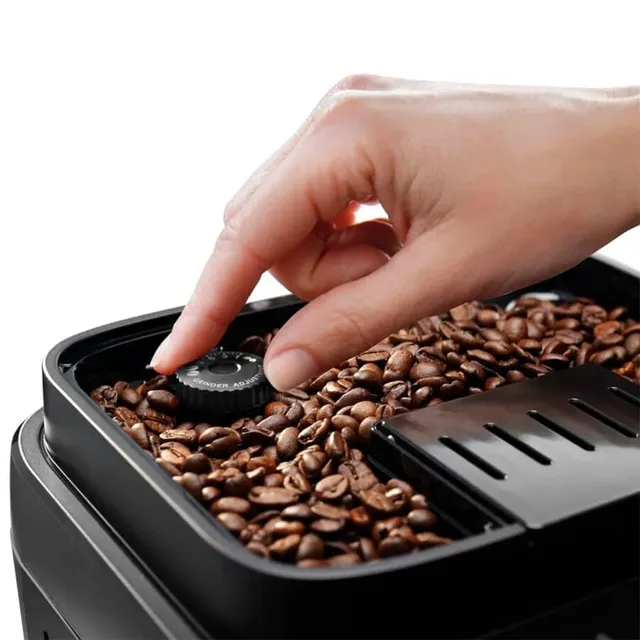
The grinder decides how fine and how even the coffee is ground. Philips names a ceramic grinder in the product name of many models, such as the Philips 5400. Other makers use steel grinding discs or a steel conical burr.
What matters more is that you can set the grind. Make it finer in small steps until the espresso no longer tastes watery. Some machines want you to change the setting only while the grinder runs; the manual says how yours works.
Bean hopper and ground-coffee chute
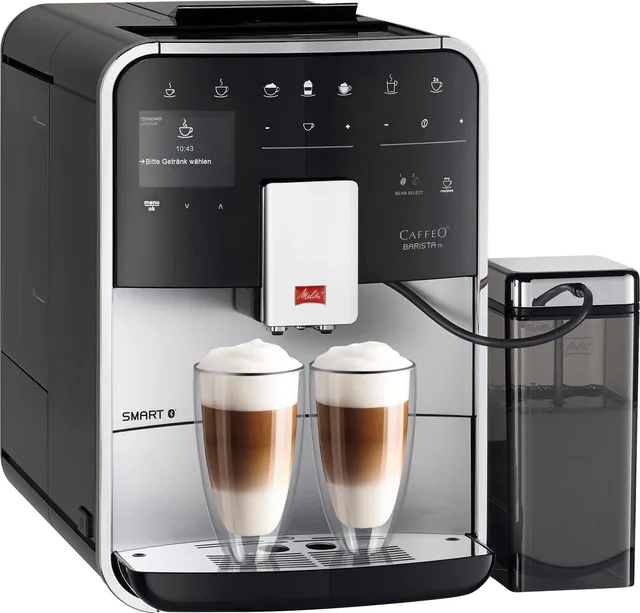
Most bean-to-cup machines have one bean hopper. A few have two, so you can keep, say, espresso beans and a milder bean side by side. Siemens puts that in the name of the EQ900 TQ907R03; Melitta gives two bean hoppers for the Melitta Barista Smart TS.
Many machines also have a small chute for ground coffee, handy for one cup of decaf. Check the product description to see whether yours does.
Drinks, controls and profiles
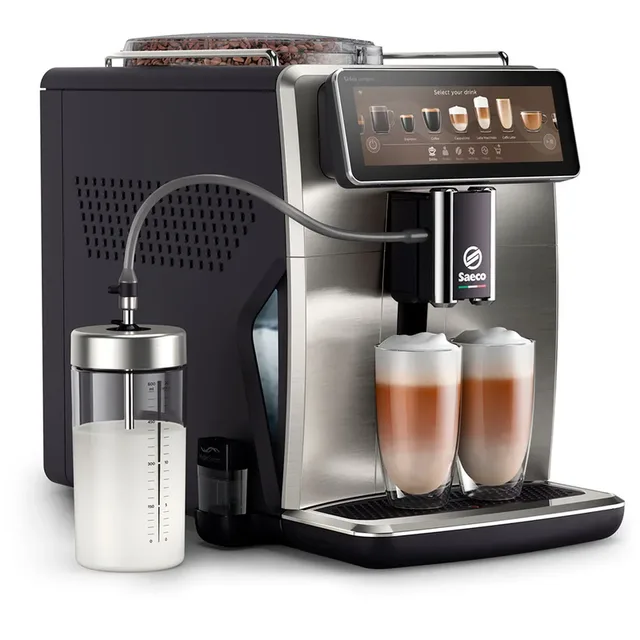
Makers often put the number of drinks in the name: twenty coffee recipes on the Philips 5500, more than fifty on the Eletta Explore ECAM450.86. For most people espresso, coffee, cappuccino and latte macchiato are what count. Profiles are useful, though: each person in the house saves their own strength and volume. Saeco gives eight profiles for the Xelsis Suprema. If two of you often drink together, check whether the machine can brew two cups at once.
Bean-to-cup machines with two hoppers or profiles
- Siemens
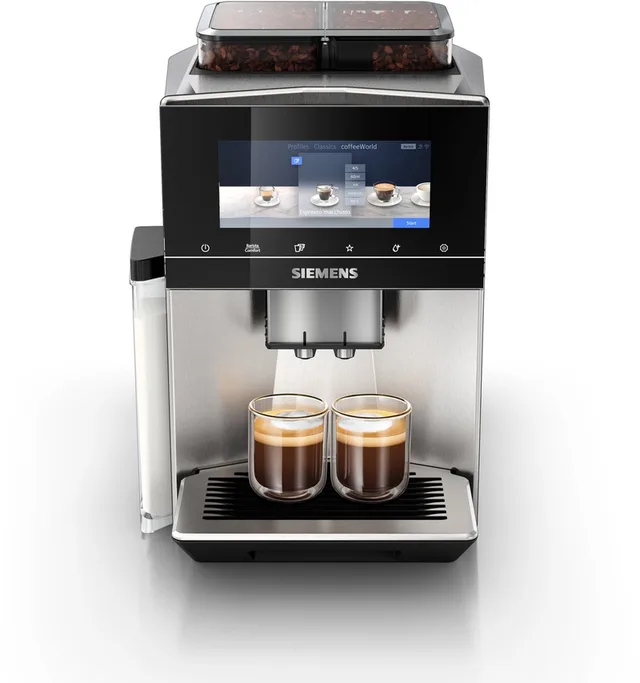
EQ900 TQ907R03
Volautomatische espressomachineRVS met 2 bonenreservoires€1,949 · at 1 shop
- Melitta
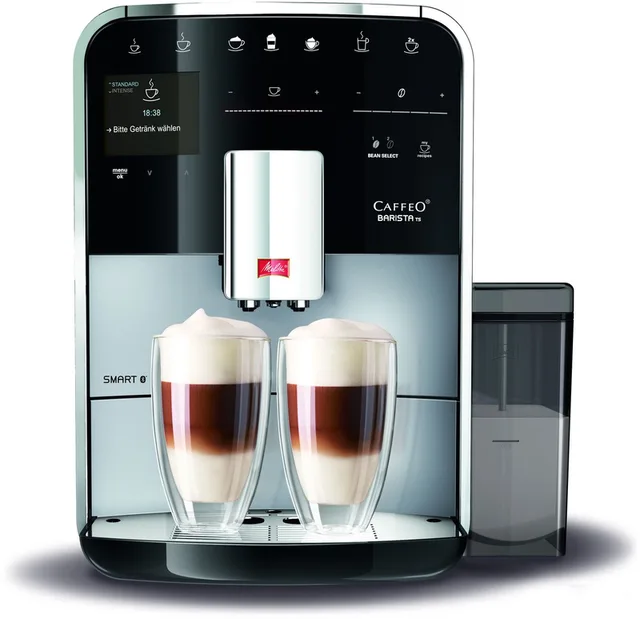
Barista Smart TS espresso machine, silver
Zilver-zwartFrom €701 · at 2 shops
Lowest in 90 days
- Saeco
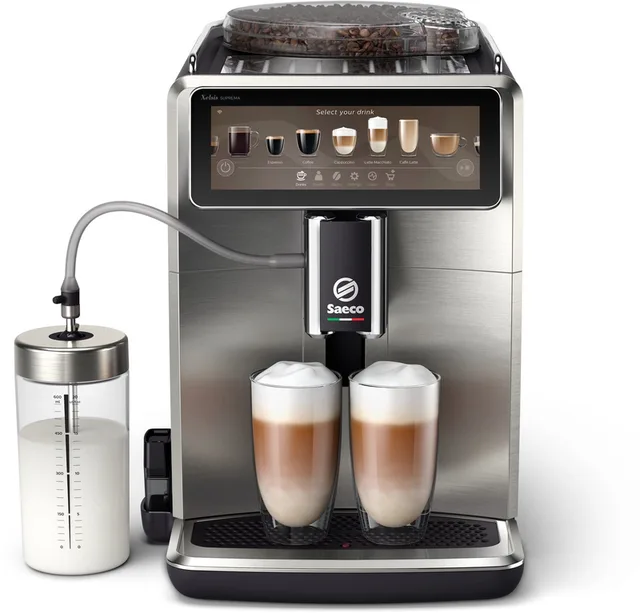
Xelsis Suprema volautomatische espressomachine
22 koffiespecialiteiten · 8 profielen15 bar1.7 l1,500 W€1,649.99 · at 1 shop
Water filter and descaling
Limescale builds up in the pipes and heater of a bean-to-cup machine. Every machine tells you when it needs descaling; how often depends on how hard your water is, which you usually set in the menu.
With a water filter in the tank you descale less often. Philips says that with the AquaClean filter you can make up to 5,000 cups without descaling, as long as you replace the filter on time; you find it on the Philips 2300 EP2331, among others. Siemens uses the Brita Intenza filter for its EQ series, Nivona the Claris filter NIRF700. Use the filter and descaler the manufacturer specifies. Products are under descaling and care.
Brewing unit and weekly upkeep
The brewing unit is the heart of the machine. On Philips, De'Longhi, Siemens, Melitta and Nivona machines it comes out: according to the manuals you rinse it under the tap regularly. Jura uses a fixed brewing unit that you clean with cleaning tablets through a programme on the machine.
Beyond that you empty the grounds container and the drip tray, and clean the milk system after every use. If you want to keep that short, pick a milk system with few loose parts.
Frequently asked questions
Which milk system is easiest to clean?
That depends on what you prefer. A milk carafe or LatteGo comes apart and you rinse it; a tube you flush with the machine's programme. Every system needs cleaning after use, or milk residue stays behind.
How often does a bean-to-cup machine need descaling?
The machine tells you, based on the water hardness you set and what you brew. With a water filter that you replace on time, it happens less often.
Can I use two kinds of beans?
Yes, with a machine that has two bean hoppers. If yours has one, many models let you use ground coffee for a single cup through the separate chute.
Do I have to clean the brewing unit myself?
A removable brewing unit you rinse yourself, as the manual describes. A fixed unit, as on Jura machines, is cleaned by the machine with a cleaning programme and tablets.
Keep looking
Crematto doesn’t test machines itself. This guide sets out what manufacturers state.
Products from this guide
Popular products with a current price at the shops. Compare the prices on the product page.
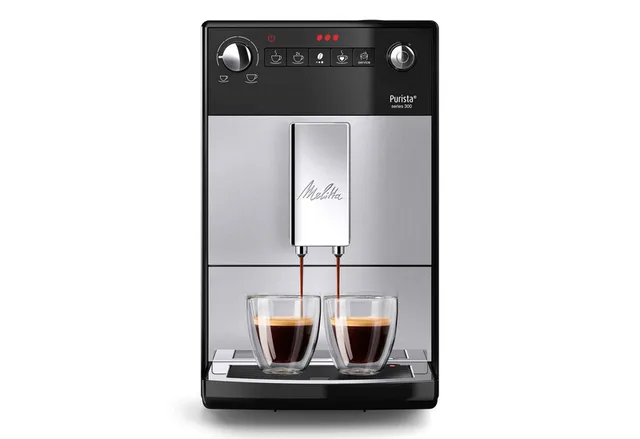
- Melitta
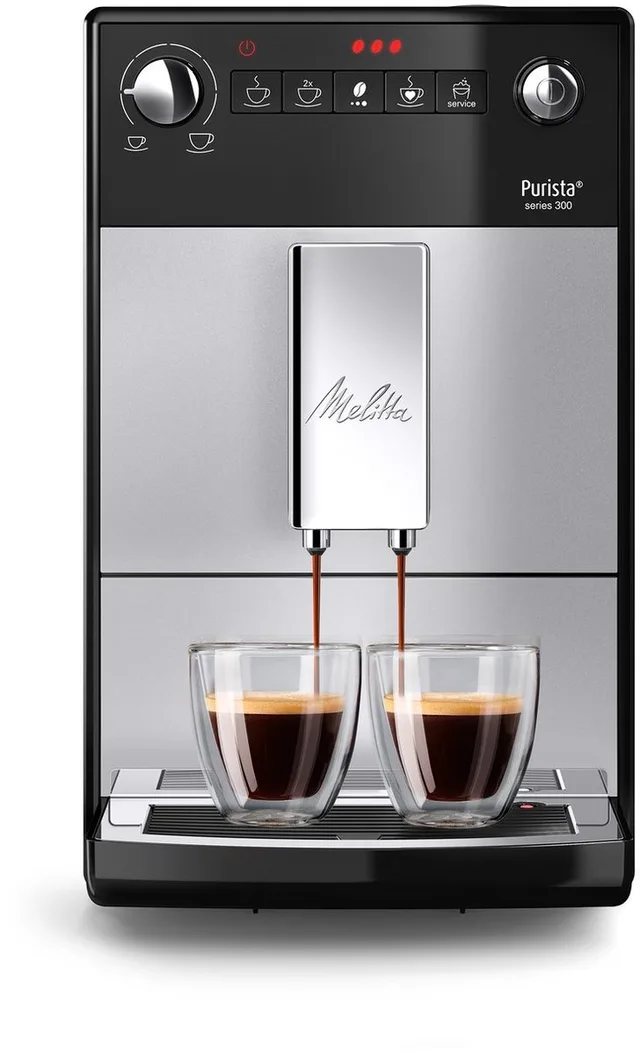
Purista F23/0-101
Volautomatische espressomachine · ZilverZwart€329 · at 1 shop
Lowest in 90 days
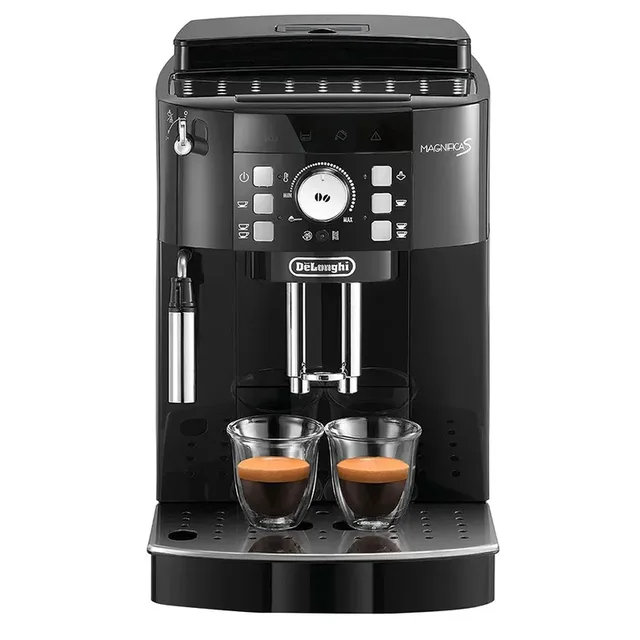
- De'Longhi
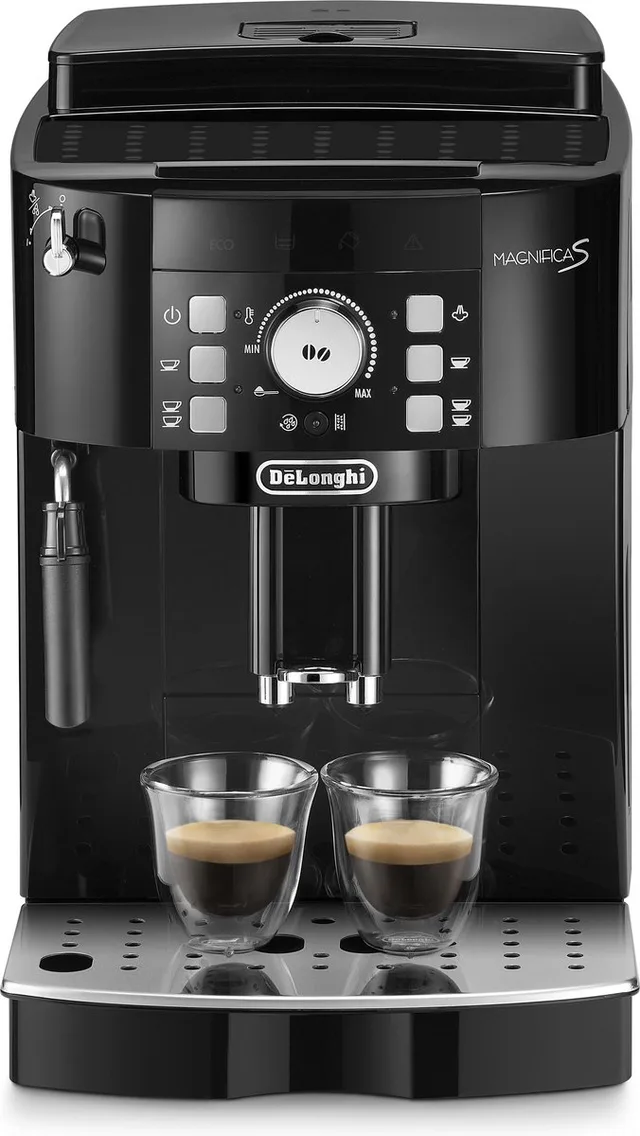
Magnifica S ECAM 21.117.B fully automatic espresso machine
15 bar1.8 l1,450 WFrom €283 · at 2 shops
- Philips
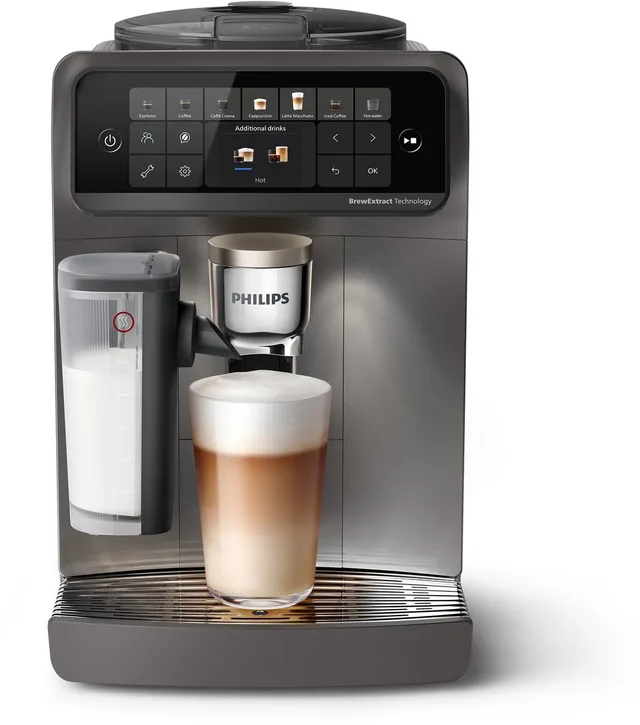
Café Aromis 6000-serie Espressomachine
25+ Warme & Koude Dranken15 bar1.9 l1,500 W€672 · at 1 shop
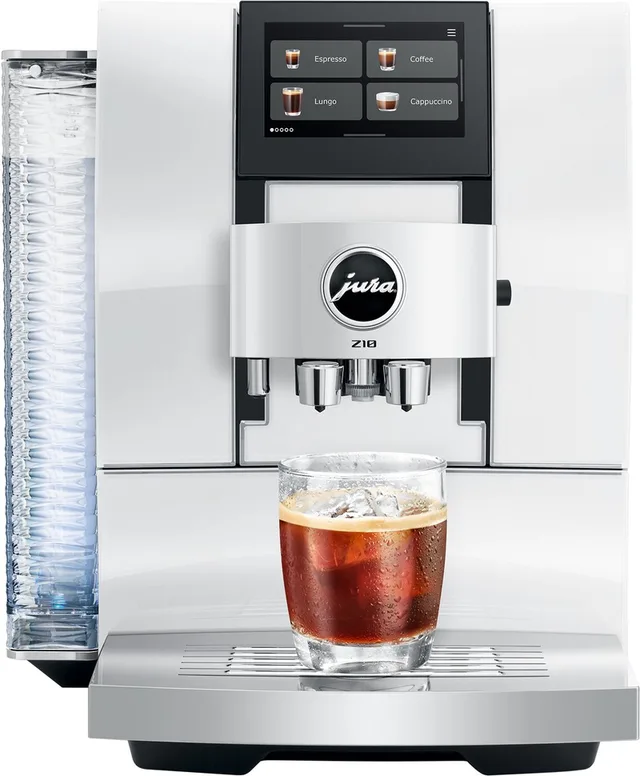
- Jura
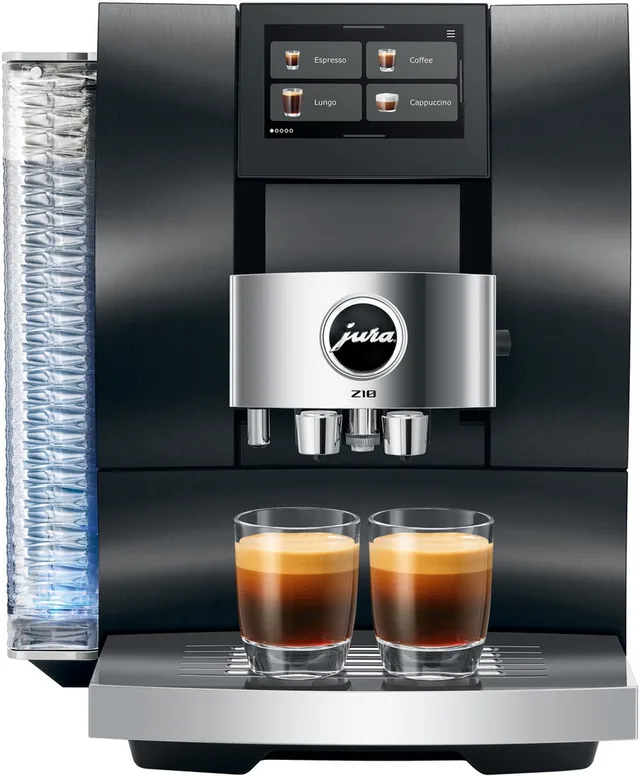
Z10 (EB) fully automatic espresso machine
15 bar2.4 lAluminium Black, Diamond BlackFrom €2,075.03 · at 4 shops
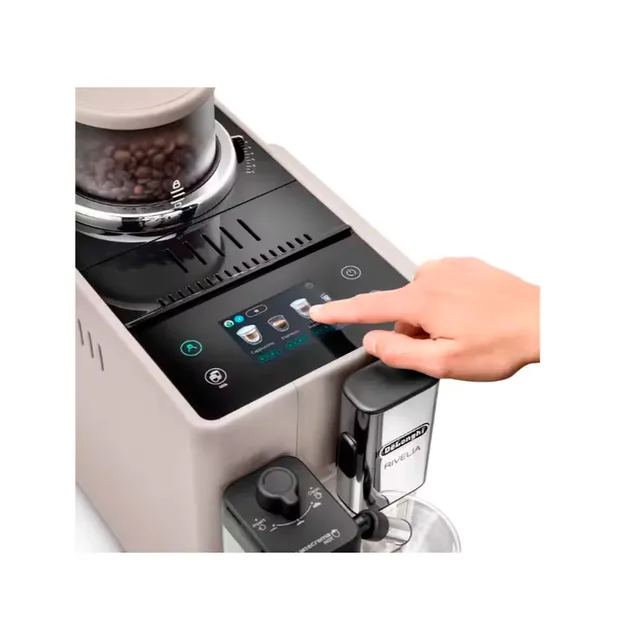
- De'Longhi
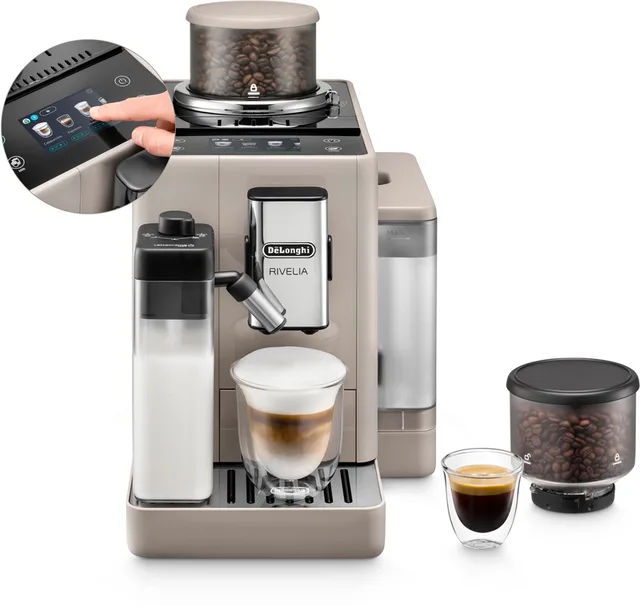
Rivelia fully automatic espresso machine with LatteCrema Hot milk frother and Bean Switch System
EXAM440.55.BG19 bar1.4 l1,450 WFrom €643.49 · at 3 shops